


Oil prices surged and global equity markets swung sharply after U.S. President Donald Trump signaled that an escalation of military strikes on Iran could come as early as Tuesday, abruptly undermining fragile hopes for a ceasefire and injecting fresh volatility into already unstable financial markets.
The renewed threat marks a sharp shift from earlier signals of diplomacy and has forced investors to rapidly reprice geopolitical risk, particularly in energy markets that are highly sensitive to disruptions in the Middle East.
In recent weeks, markets had been reacting to mixed messaging from Washington. Temporary pauses in U.S. strikes and references to “productive” talks with Tehran had briefly lifted equities and pushed oil lower. However, those gains proved fragile. Trump’s latest warning—paired with a hard deadline tied to Iran’s actions in the Strait of Hormuz—has reversed sentiment, reinforcing fears that the conflict could intensify rather than de-escalate.
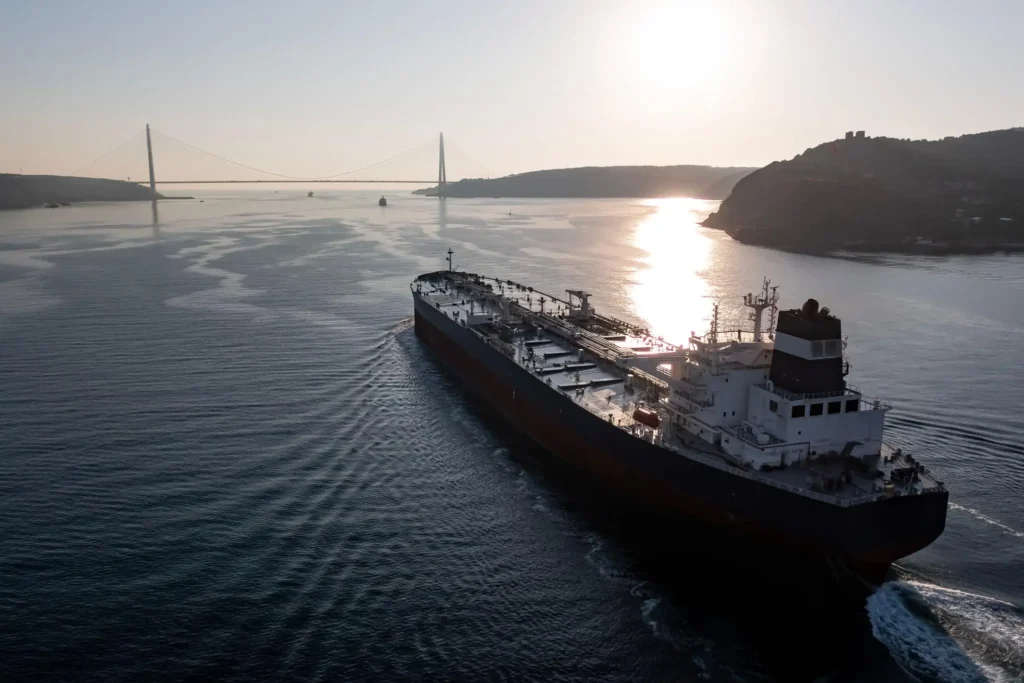
The stakes are unusually high because the Strait of Hormuz is one of the world’s most critical oil chokepoints, responsible for roughly one-fifth of global oil and liquefied natural gas flows. Any sustained disruption or military escalation in the region has immediate implications for global supply chains, inflation, and economic stability.
Market data reflects this tension clearly. U.S. crude oil futures recently climbed above $112 per barrel, while Brent crude settled near $109.77, levels that underscore persistent supply concerns. At the same time, equity markets have been volatile rather than decisively bearish—U.S. indices posted modest gains in the latest session, with the S&P 500 rising 0.31% and the Nasdaq up 0.45%, highlighting the push-and-pull between war risk and lingering optimism for diplomacy.
This divergence—rising oil alongside uneven stock performance—signals a market struggling to interpret conflicting signals. On one hand, investors are pricing in the possibility of supply shocks and prolonged instability. On the other, they remain cautious about overreacting, given the pattern of abrupt policy reversals and intermittent diplomatic overtures.
Further complicating the outlook are escalating regional threats. Reports of strikes on oil infrastructure in neighboring Gulf states and warnings from Iran of “devastating and widespread” retaliation have heightened fears that the conflict could spill beyond bilateral confrontation. Such a scenario would significantly amplify risks to global energy supplies and could trigger broader financial contagion.

From a professional and economic standpoint, the implications are immediate. Higher oil prices feed directly into inflation, increasing pressure on central banks and potentially delaying interest rate cuts. For import-dependent economies—particularly in Asia and parts of Europe—the cost shock could weaken growth and currencies. Meanwhile, energy companies may benefit in the short term, but broader equity markets remain vulnerable to sudden sentiment shifts.
Looking ahead, markets are likely to remain highly sensitive to political developments over the coming days. If the threatened escalation materializes, oil prices could spike further and equities may face sharper declines. Conversely, any credible diplomatic breakthrough—such as reopening the Strait of Hormuz—could quickly reverse current trends, sending oil lower and lifting global stocks.
For now, investors are operating in a headline-driven environment where policy signals, rather than fundamentals, are dictating market direction. The next 48 hours, tied to Trump’s deadline, may prove decisive in determining whether the crisis moves toward resolution or a deeper, more disruptive phase.