Gold prices held steady as investors balanced cautious optimism over U.S.–Iran talks with growing concern about upcoming U.S. inflation data. The pause in price movement reflects a market caught between geopolitical uncertainty and expectations of tighter monetary policy.
Spot gold traded near $4,800 per ounce, showing little change, while U.S. gold futures edged slightly lower, according to Reuters.
The muted movement signals hesitation among investors, who are waiting for clearer direction from both diplomacy and economic indicators.
Recent weeks have been marked by volatility driven by tensions involving Iran and the United States.
A fragile ceasefire and renewed diplomatic engagement have reduced immediate risk, but markets remain cautious about whether stability will hold.
Gold’s behavior highlights a shift in how the asset reacts to global shocks.
Despite being a traditional safe haven, prices have struggled to gain momentum as inflation concerns push interest rate expectations higher.
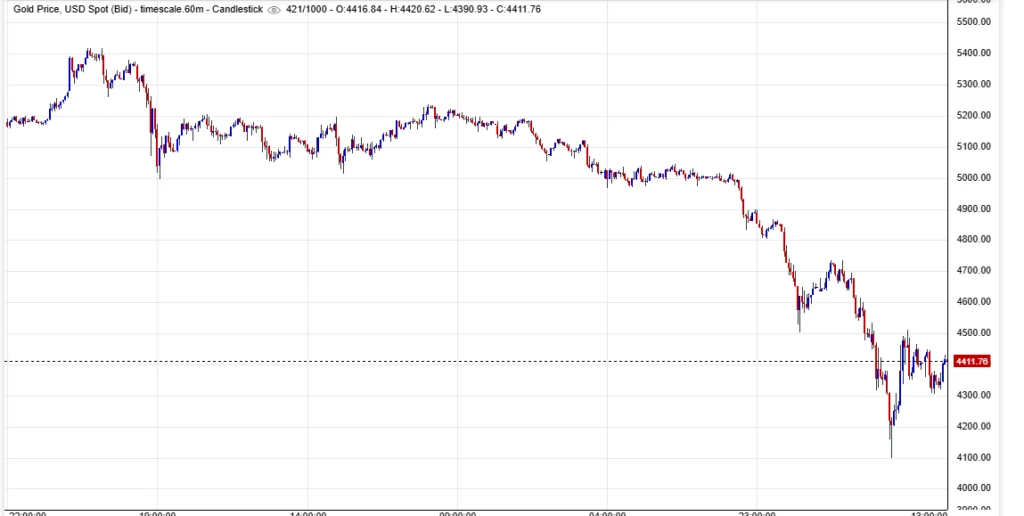
Data shows gold has fallen more than 10% from recent peaks following the escalation of conflict earlier this year.
This decline reflects how rising yields and a stronger dollar can offset demand for safe-haven assets.
The focus now turns to U.S. inflation data, particularly indicators tied to the Federal Reserve.
Markets are closely watching whether inflation remains above the central bank’s 2% target, which would justify keeping interest rates elevated.
Higher interest rates typically weaken gold because the metal does not offer yield.
This creates a direct trade-off for investors between holding gold and interest-bearing assets like bonds.
Geopolitical developments still play a critical role in shaping sentiment.
Oil prices dropped sharply—by as much as 13–15%—after ceasefire news, easing inflation fears and stabilizing broader markets.
Analysts suggest gold may remain range-bound in the near term.
Price forecasts indicate a trading band between $4,700 and $4,900 per ounce, reflecting uncertainty across both economic and political fronts.
For investors, the current environment complicates strategy.
Gold is no longer reacting purely to crisis signals but is increasingly tied to interest rates, currency strength, and macroeconomic data.
Looking ahead, the direction of gold will depend on two factors: the durability of U.S.–Iran diplomacy and the trajectory of inflation.
A cooling inflation trend could support prices, while persistent inflation or renewed conflict may keep gold volatile and directionless.