GameStop’s audacious $56 billion bid to acquire ebay has triggered immediate skepticism across financial markets, with investors and analysts questioning whether the much smaller retailer can realistically finance a takeover of eBay. The proposal, announced May 4, 2026, is one of the most aggressive acquisition attempts in recent years—and one that markets are not yet taking seriously.
The offer values eBay at $125 per share in a half-cash, half-stock deal, representing roughly a 20% premium to its prior closing price. Yet despite that premium, eBay’s shares have traded significantly below the offer level, a clear signal that investors doubt the deal will close.
The skepticism stems primarily from the stark imbalance between the two companies. GameStop’s market value is roughly $11–12 billion, while eBay is valued at nearly four times that size. GameStop also carries about $4.2 billion in debt and has approximately $9 billion in cash—far short of what would be required to fund such a transaction outright.

To bridge the gap, CEO Ryan Cohen has outlined a financing plan that includes issuing new shares and securing external funding. The company has pointed to a “highly confident” letter from TD Securities for up to $20 billion in debt financing. However, analysts note that this is not a binding commitment, leaving a substantial funding shortfall unresolved.
This financing uncertainty is central to investor concern. Bernstein analysts have flagged “significant financing challenges,” while Morgan Stanley has emphasized the lack of detailed funding structure and questioned whether shareholders would accept the dilution required to complete the deal.
The structure of the deal itself raises additional complications. Analysts estimate GameStop could need to issue over one billion new shares, potentially reducing existing shareholders’ ownership to as little as 25–30% of the combined entity. This level of dilution would fundamentally reshape the company and could face resistance from current investors.
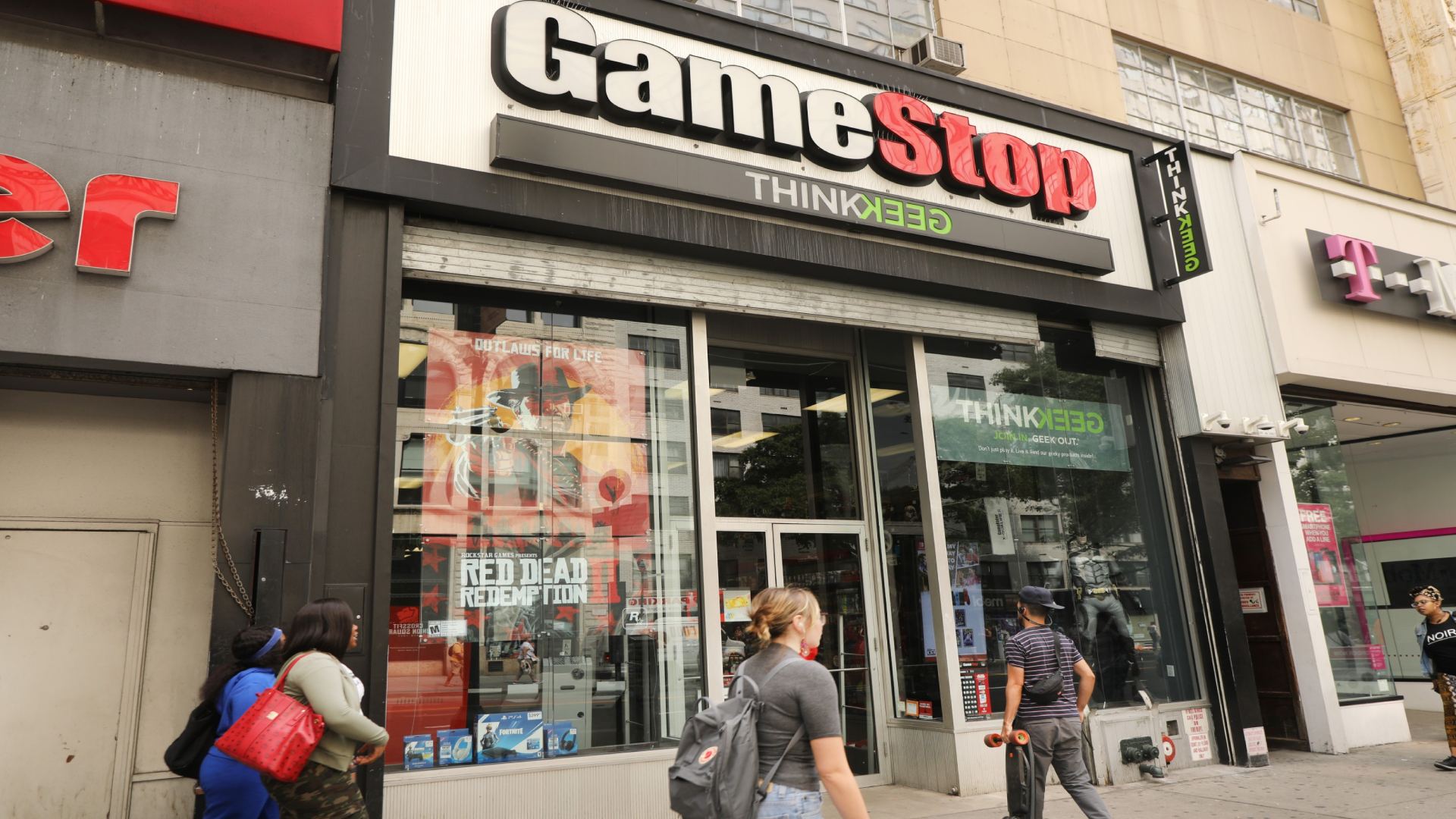
Strategically, Cohen argues the acquisition could transform both businesses. His plan involves integrating GameStop’s roughly 1,600 physical stores into eBay’s logistics network, enabling drop-offs, authentication services, and faster fulfillment. He also claims the combined company could deliver up to $2 billion in annual cost savings.

However, the industrial logic remains contested. eBay operates as a marketplace platform connecting buyers and sellers without holding inventory, while GameStop follows a traditional retail model that relies on inventory ownership and physical storefronts. Analysts say these “fundamentally different” business models limit potential synergies and complicate integration.
Market reaction underscores these doubts. While eBay shares rose modestly on the news—by about 7–10%—they remain well below the $125 offer price. Meanwhile, GameStop’s shares declined following the announcement, reflecting investor concern over execution risk and financing pressure.
The broader context also matters. eBay has been undergoing a strategic repositioning toward high-value categories such as collectibles and luxury resale, with its stock already gaining momentum in 2026. This reduces the incentive for eBay shareholders to accept a risky, highly leveraged buyout from a smaller company.
Looking ahead, the deal faces steep odds. eBay’s board is reviewing the proposal but has not engaged in negotiations, and Cohen has indicated he may take the bid directly to shareholders if rejected. Even so, without a clear and credible financing plan, the offer risks being viewed less as a viable takeover and more as a high-profile strategic gambit.
If the bid ultimately fails, it could still have lasting consequences—potentially putting eBay in play for other acquirers or forcing both companies to clarify their long-term strategies. For now, however, the market’s message is clear: ambition alone is not enough to close a $56 billion deal.