

Netflix is set to report its quarterly earnings after the bell, with investors closely watching whether the streaming giant can sustain its growth momentum amid rising competition and shifting business strategies.
The company will release its Q1 2026 results on April 16 after U.S. markets close, marking a critical update following recent price increases and its decision to step back from a high-profile acquisition attempt. Analysts expect solid financial performance, but the report is likely to test whether Netflix can balance revenue growth with rising costs and new monetization efforts.
In the lead-up to earnings, consensus estimates suggest Netflix will report revenue of roughly $12.18–$12.2 billion and earnings per share of about $0.76 to $0.79, representing around 15% year-over-year growth.
Markets are also bracing for volatility, with options traders pricing in a potential 6% swing in the stock following the announcement.
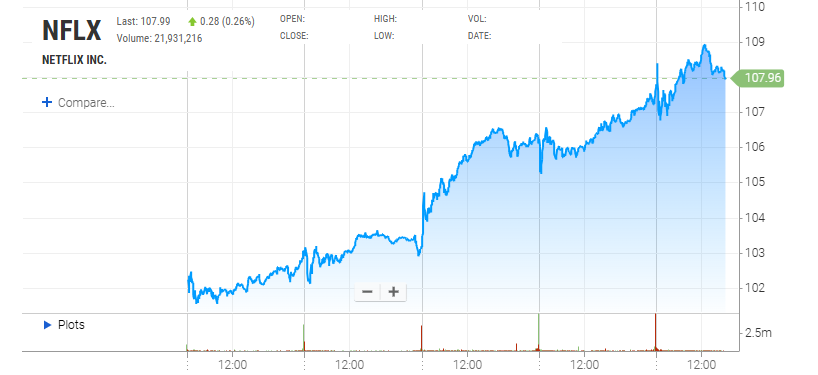
This earnings release comes at a pivotal moment for Netflix’s evolving business model. After abandoning its bid to acquire Warner Bros. Discovery, the company is refocusing on organic growth—particularly through advertising and content investment.
That shift places pressure on management to demonstrate that its ad-supported tier and pricing strategy can deliver sustained revenue expansion without hurting subscriber growth.
One of the most closely watched metrics will be advertising revenue. Analysts expect the company’s ad business to generate roughly $598 million in Q1 alone, with full-year projections exceeding $3 billion in 2026.
Recent industry estimates suggest Netflix could double its ad revenue from about $1.5 billion in 2025 to $3 billion this year, highlighting how quickly this segment is becoming central to its strategy.
At the same time, Netflix’s pricing power remains a key driver. The company recently raised subscription prices, with premium ad-free plans reaching as high as $26.99 per month, while its lower-cost ad-supported tier continues to attract budget-conscious users.
This dual approach allows Netflix to increase average revenue per user while expanding its advertising audience—a model that analysts increasingly view as scalable.

However, the company faces clear risks. Content spending remains high, with estimates suggesting Netflix continues to invest around $20 billion annually in programming, which could pressure margins if revenue growth slows.
Consensus forecasts indicate an operating margin of about 32% for the quarter, slightly below earlier expectations due to higher expenses.
Subscriber trends and engagement will also be critical. Netflix already has more than 325 million paying subscribers globally, making further growth harder to achieve and shifting focus toward monetization rather than expansion.
Any signs of slowing engagement or increased churn could weigh heavily on investor sentiment, especially after recent price hikes.
Professionally, this earnings report matters because it will signal whether Netflix can successfully transition from a subscriber-growth story to a diversified media and advertising platform. Strong results could reinforce confidence in its long-term strategy, while any miss—particularly in ad revenue or margins—could trigger sharp market reactions.
Looking ahead, the stakes extend beyond a single quarter. If Netflix demonstrates consistent ad growth and stable margins, it could strengthen its position as a dominant global streaming and advertising platform. But if costs rise faster than revenue or user growth stalls, the company may face renewed scrutiny over its valuation and long-term growth assumptions.