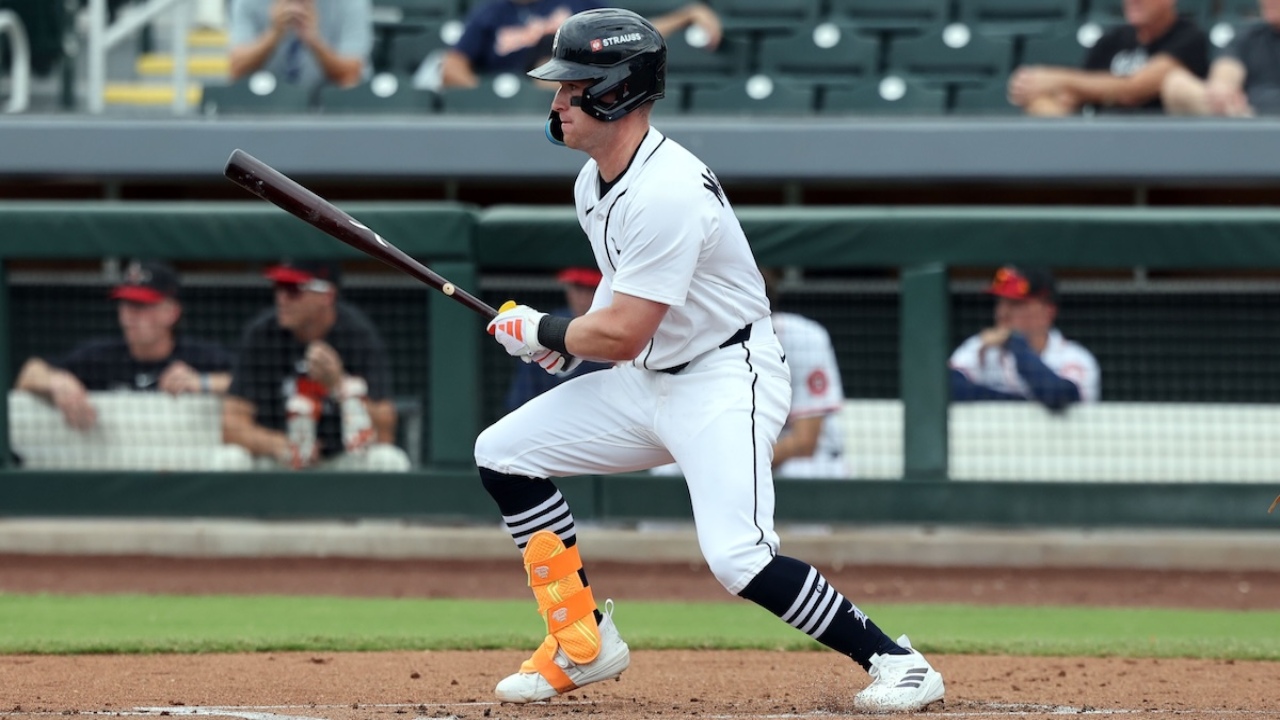
The Detroit Tigers have made a decisive long-term bet on their future, agreeing to an eight-year, $150 million contract extension with rookie shortstop Kevin McGonigle—a deal that signals both confidence in elite young talent and a broader shift in Major League Baseball’s financial strategy.
The agreement, announced Wednesday, begins in 2027 and runs through 2034, covering McGonigle’s remaining team-control years and his first three seasons of free agency. The contract includes a $14 million signing bonus and performance escalators that could push the total value to $160 million.
This move comes unusually early in McGonigle’s career. At just 21 years old and fewer than 20 major league games into his debut season, he has already secured one of the largest contracts ever awarded to a player with such limited MLB experience. The decision reflects a growing trend across the league, where teams prioritize locking in top prospects before they reach peak market value.

McGonigle’s rapid rise explains the urgency. Entering the 2026 season, he was ranked the No. 2 overall prospect in baseball, and his early performances have justified that status. Through his first 17 games, he is batting .311 with a .417 on-base percentage and a .909 OPS, while demonstrating advanced plate discipline with more walks than strikeouts. These metrics place him among the most productive young hitters in the league at the start of the season.
From a strategic perspective, the Tigers are effectively buying cost certainty and long-term control. By structuring the deal to begin in 2027, the franchise avoids immediate payroll pressure while securing a potential franchise cornerstone through his age-30 season. The contract also includes escalating salaries—from $1 million in 2027 to $23 million annually in later years—aligning compensation with expected performance growth.
The deal also reflects a broader league-wide shift. Recent contracts for young players, including multi-year extensions signed shortly after MLB debuts, highlight a clear pattern: teams are increasingly willing to assume early risk in exchange for long-term upside. Comparable deals for prospects such as Konnor Griffin and Colt Emerson underscore how aggressively franchises are moving to secure elite talent before arbitration and free agency inflate costs.
For the Tigers, the timing is particularly significant. The organization has been rebuilding in recent years, focusing on developing homegrown talent rather than relying on high-cost free agents. Locking in McGonigle provides both competitive stability and a marketable centerpiece for the franchise as it aims to return to postseason contention.

There are, however, inherent risks. Committing $150 million to a player with limited MLB exposure carries uncertainty, particularly in a sport where performance variability and injuries can significantly impact long-term value. Yet early indicators—both statistical and scouting-based—suggest McGonigle possesses the skill set and consistency to justify the investment.
Looking ahead, this deal could set a benchmark for future contracts involving top prospects. If McGonigle continues his current trajectory, the agreement may ultimately be viewed as a bargain relative to market rates for elite shortstops. Conversely, if performance declines, it will serve as a case study in the risks of early extensions.
In the immediate term, the Tigers have made their position clear: they are building around Kevin McGonigle. The success of that strategy will depend on whether his early promise translates into sustained elite production at the highest level of the game.