

The United States and China advanced a trade framework covering reciprocal tariff reductions and agreed on a major Chinese purchase commitment for U.S. coal following President Xi Jinping’s state visit to Washington. The White House said the two countries reached consensus on more favorable tariff treatment for $30 billion of non-sensitive goods in each direction and that China will import at least 10 million metric tons of U.S. coal in both 2027 and 2028.
The agreements were outlined in a White House fact sheet released after Xi’s Sept. 23-25 visit. The measures represent progress in implementing trade mechanisms that Washington and Beijing established earlier this year, although they do not amount to a broad removal of tariffs across bilateral commerce.
Under the U.S.-China Board of Trade, the two governments reached consensus on recommendations for more favorable tariff treatment for selected non-sensitive products. The White House said U.S. exports covered by the discussions include agricultural goods, fish and seafood, logs and wood products, cosmetics and medical devices. Products entering the United States from China include consumer goods such as small appliances, toys, holiday decorations and children’s car seats.
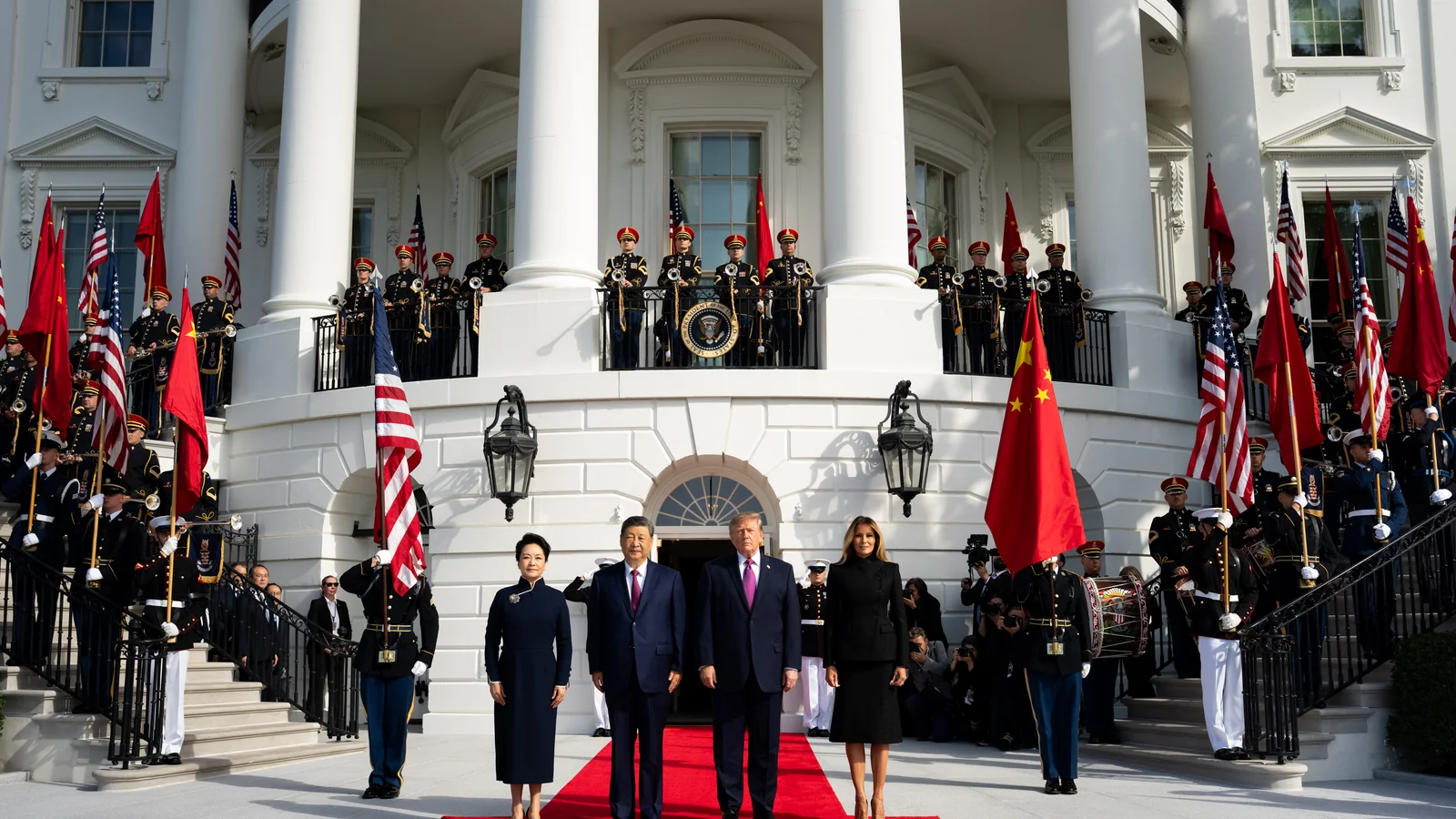
China’s government also confirmed the trade mechanism and the $30 billion reciprocal tariff-reduction arrangement. Its official account of the summit said the two sides endorsed the outcomes of their economic and trade consultations and instructed officials to implement them. That readout did not provide the same product-level detail as the White House statement.
The tariff arrangement builds on consultations that had been underway before Xi’s visit. China’s Commerce Ministry said before the summit that the two sides were discussing a $30 billion reciprocal tariff-reduction arrangement on each side but had not yet released the final product list. The latest summit readouts indicate that the framework has moved into implementation, while specific tariff treatment remains tied to the goods covered by the mechanism.
The coal commitment gives the U.S. energy sector another concrete element of the trade discussions. The White House said China will import at least 10 million metric tons of U.S. coal in 2027 and another 10 million metric tons in 2028. The statement did not specify the monetary value of those purchases, individual suppliers or the precise grades and delivery terms involved.
For U.S. producers, the commitment potentially provides additional access to the world’s largest coal-consuming market, although the commercial impact will depend on actual shipments, pricing and contract execution. China has historically sourced coal from a range of international suppliers, and the latest commitment does not by itself establish how much of its overall coal demand will be supplied by the United States.
The summit also established a U.S.-China Board of Investment, according to the White House, creating a government-to-government channel for discussing potential investment opportunities and obstacles. The two sides separately agreed to continue working on shortages involving rare earths and other critical minerals, an issue that has been a major source of supply-chain uncertainty during the broader trade dispute.
The developments come as companies continue to adjust to tariffs and changing trade rules between the world’s two largest economies. Chinese purchases of U.S. Boeing aircraft have also featured in the broader series of commercial commitments discussed between Washington and Beijing this year.
Despite the new measures, the summit did not resolve every major area of economic disagreement. The two governments continue to manage disputes involving technology, critical minerals, market access and strategic industries, while the tariff framework remains focused on selected non-sensitive goods rather than a comprehensive restructuring of bilateral trade.
For businesses, the immediate significance is the shift from negotiations toward formal mechanisms for managing parts of the trade relationship. The coal commitment and tariff framework provide specific areas where commercial activity could increase, while the final economic effect will depend on how the agreed arrangements are implemented and whether the two sides maintain the broader trade truce.
