
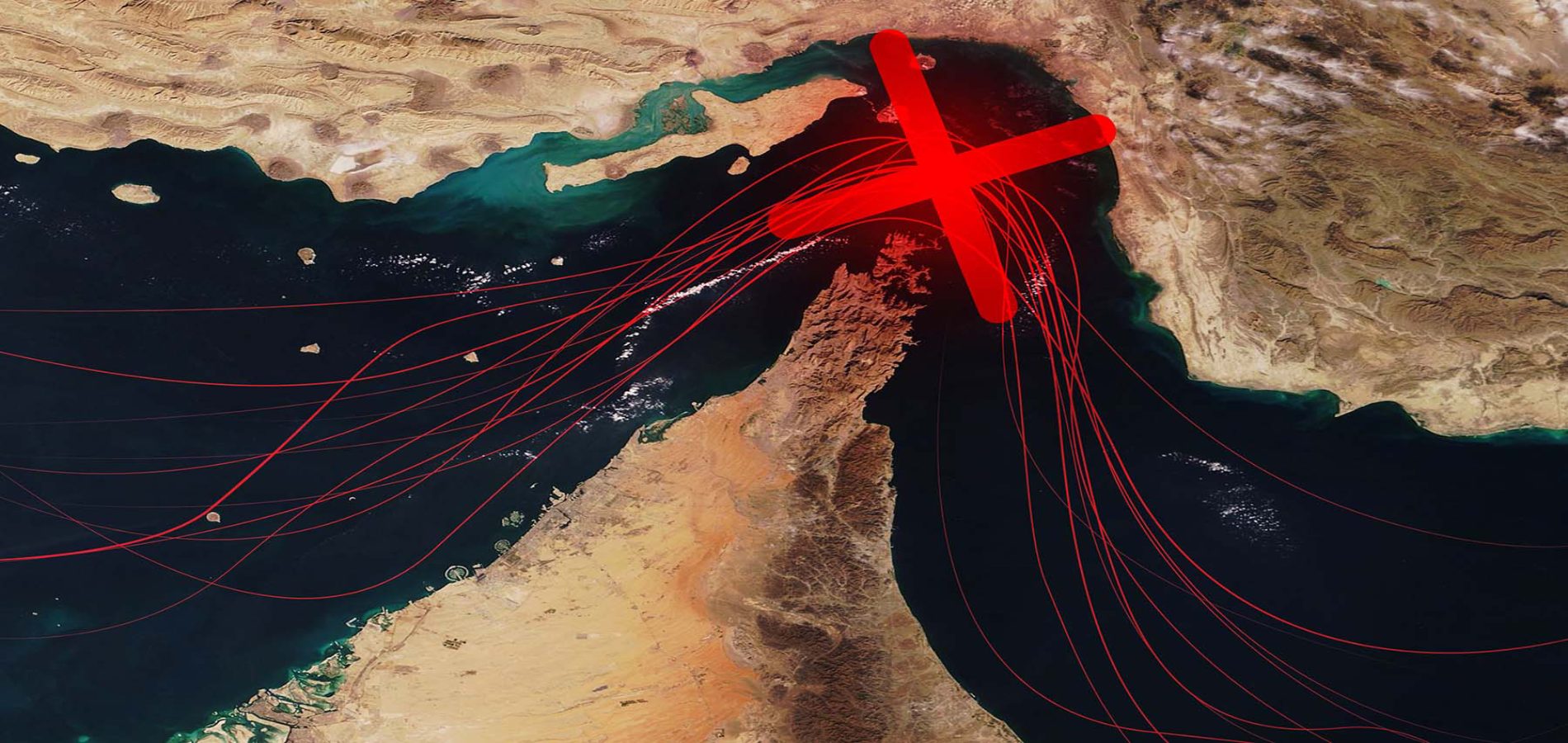
A potential disruption in the Strait of Hormuz—one of the world’s most critical oil chokepoints—could trigger a billion-barrel supply shock, with analysts warning that the resulting price spike may ultimately destroy global demand. The scenario underscores a paradox at the heart of energy markets: the same shock that drives prices up can also weaken consumption sharply.
The Strait of Hormuz handles roughly 20% of global oil consumption, making it the single most important transit route for crude exports, particularly from Gulf producers such as Saudi Arabia and United Arab Emirates. Even a partial disruption—whether through military escalation or shipping constraints—can remove millions of barrels per day from the market almost instantly, tightening supply and sending prices higher.
Recent geopolitical tensions in the Middle East have renewed fears of such a disruption. Insurance premiums for tankers passing through the region have risen, and shipping companies are already factoring in higher risk costs. These early signals often precede more significant supply dislocations, as seen during past crises when oil flows through Hormuz were threatened.
What makes the current situation more complex is the scale of potential impact. Analysts estimate that a sustained disruption could remove up to 15–20 million barrels per day from global supply—equivalent to a “billion-barrel shock” over time. That level of disruption would likely push crude prices well above $100 per barrel, depending on how long the outage persists.
However, higher prices do not automatically translate into sustained gains for producers. History shows that sharp spikes in oil prices tend to erode demand. When energy costs surge, industries cut consumption, transportation slows, and consumers reduce spending. This demand destruction can eventually pull prices back down, sometimes abruptly.
There are already signs of fragility in global demand. Growth in major economies has been uneven, with manufacturing activity softening in parts of Europe and Asia. In the United States, fuel consumption has shown periods of stagnation despite economic resilience, suggesting that higher prices could quickly dampen usage.
The feedback loop is critical. A sudden supply shock lifts prices, but those higher prices act as a brake on economic activity. Airlines reduce routes, logistics firms optimize fuel use, and consumers delay travel or switch to more efficient alternatives. Over time, these adjustments can offset the initial supply deficit, leading to a rebalancing of the market.

Market participants are also watching strategic reserves and alternative supply routes. Countries may release oil from emergency stockpiles or reroute shipments through pipelines to bypass the Strait. While these measures can cushion the blow, they are unlikely to fully replace the scale of Hormuz-linked exports in the short term.
For energy companies and policymakers, the implications are significant. A prolonged disruption could trigger inflationary pressures globally, forcing central banks to maintain tighter monetary policies. At the same time, it could accelerate investment in alternative energy and diversification of supply chains, reducing long-term dependence on a single chokepoint.
Looking ahead, the trajectory of oil markets will depend on how tensions evolve around the Strait of Hormuz. A brief disruption may cause a temporary spike, but a sustained crisis could reshape demand patterns and energy policy worldwide. The key risk is not just higher prices—it is the possibility that those prices rise so far, and so fast, that they ultimately choke off the very demand that sustains the market.