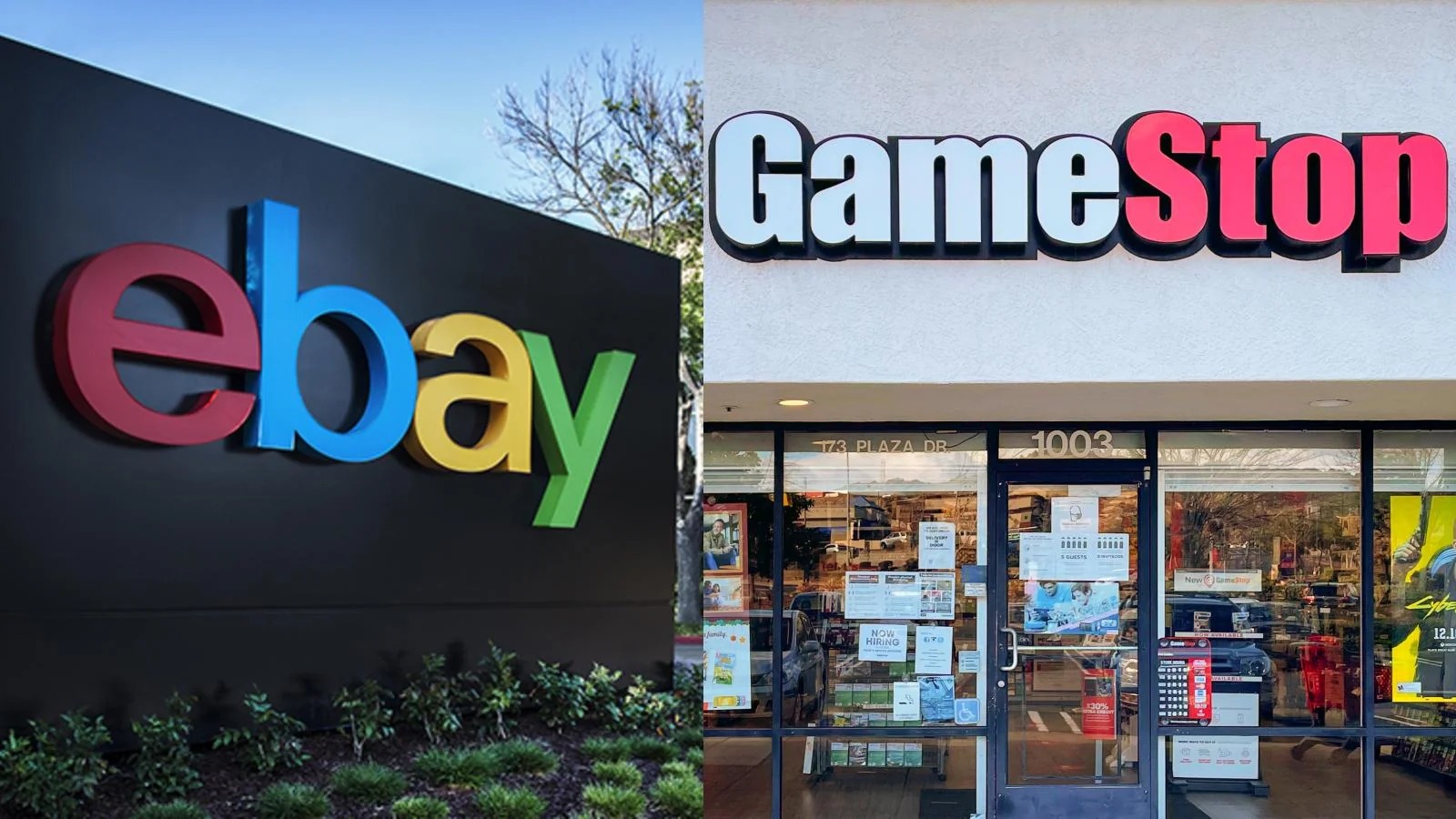
GameStop’s ambitious attempt to acquire eBay has been firmly rejected, with eBay’s board dismissing the proposed $56 billion deal as “neither credible nor attractive.” The unusually blunt response highlights growing skepticism on Wall Street about GameStop’s transformation strategy and raises serious questions about whether the video game retailer can realistically pursue acquisitions on such a massive scale.
In a formal response issued Tuesday, eBay said its board had reviewed GameStop’s unsolicited proposal and concluded that the offer failed to provide a convincing financial or strategic case. The proposal reportedly valued eBay at roughly $125 per share in a mix of cash and stock.
The rejection comes after GameStop disclosed earlier this month that it had quietly built a 5% stake in eBay and intended to combine the two companies described as a broader “enthusiast commerce” ecosystem. GameStop argued that its network of approximately 1,600 U.S. stores could serve as logistics hubs and pickup locations for eBay transactions, while live-stream sale could create new revenue streams.

But eBay’s board was unconvinced. In a letter signed by Chairman Paul Pressler, the company cited multiple concerns, including “uncertainty” surrounding the financing plan, the operational risks of merging two very different businesses, and doubts about the governance structure of a combined company.
One of the biggest issues is the financing itself. GameStop’s proposal relied on approximately $20 billion in debt financing from TD Bank, contingent on the merged entity obtaining an investment-grade credit rating, reportedly viewed as unlikely. The rest of the financing structure has not been clearly explained, intensifying investor concerns given that GameStop’s own market value remains far below eBay’s.
The market reaction reflected that skepticism. GameStop shares fell roughly 4% in premarket trading after the rejection became public, while eBay stock also slipped modestly. Analysts noted that eBay’s shares had consistently traded well below the proposed takeover price, signaling that investors never believed the transaction was likely to close.
The failed bid also underscores the sharply different trajectories of the two companies. eBay has spent the past several years stabilizing its business and focusing on higher-margin categories such as collectibles and luxury goods. According to Reuters, eBay’s stock has risen more than 200% during CEO Jamie Iannone’s six-year tenure, while its EBITDA margins remain significantly stronger than GameStop’s.

By contrast, GameStop continues trying to redefine itself after the meme-stock frenzy of 2021. Although the company has built a substantial cash reserve through share offerings, many analysts remain unconvinced that its long-term business model is sustainable. Critics argue that the eBay bid looked more like a high-risk attempt to reinvent the company than a financially practical acquisition strategy.
Still, the situation may not be completely over. Several reports indicate Cohen could attempt to bypass eBay’s board and appeal directly to shareholders, potentially setting the stage for a hostile takeover attempt or proxy fight. However, with financing doubts unresolved and investor confidence already weak, the odds of a successful acquisition currently appear low.
For now, eBay’s rejection sends a clear message: the company believes its future is stronger on its own than under GameStop’s increasingly aggressive vision for expansion.