
Chinese automaker Geely has reportedly acquired part of a vehicle assembly facility from Ford Motor in Spain, marking a significant step in its push to establish a manufacturing foothold inside Europe. The deal, centered on Ford’s Almussafes plant in Valencia, signals a broader shift in how Chinese carmakers are expanding globally.
According to multiple industry reports and a Reuters account citing Spanish trade publication La Tribuna de Automoción, Geely has agreed to purchase the “Body 3” assembly section of the plant. The facility is expected to be used to produce one of Geely’s own models, with discussions also underway about manufacturing vehicles for Ford itself.
The move comes at a critical time for the European automotive sector. Chinese automakers have been accelerating efforts to localize production within the European Union, largely to navigate tariffs and tightening import regulations on foreign-built electric vehicles. By acquiring an existing production line rather than building a new factory from scratch, Geely gains immediate access to infrastructure, supply chains, and a skilled workforce.
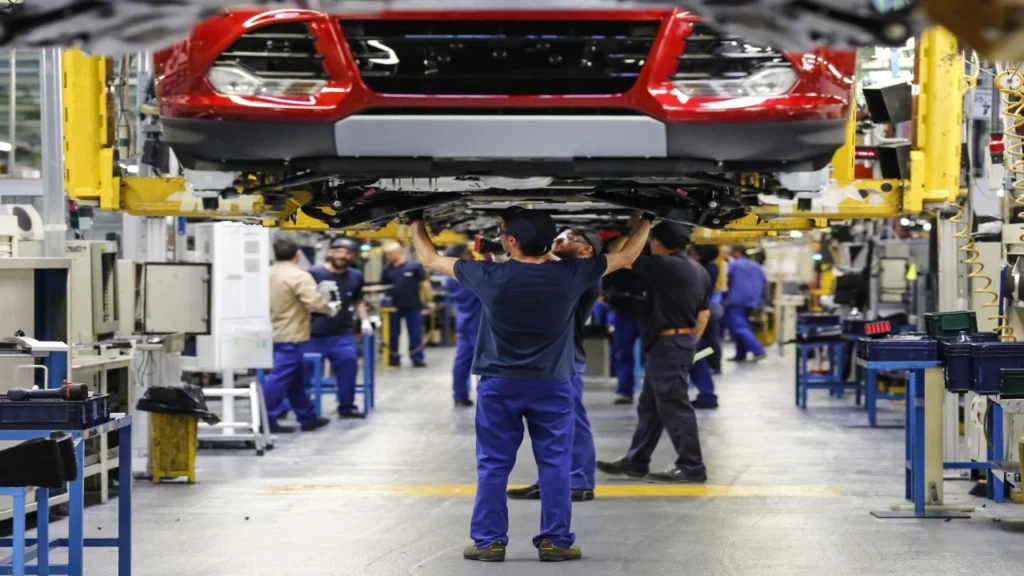
The Almussafes plant has long been a cornerstone of Spain’s auto industry, but its output has declined sharply in recent years. Production has fallen below 150,000 units annually, far from its historical peak, as Ford scaled back models and restructured its European operations. This underutilization has made the facility an attractive entry point for external investors like Geely.
From a strategic standpoint, the reported agreement reflects a pragmatic alignment of interests. For Ford, offloading part of the plant could help stabilize operations and avoid deeper cuts while maintaining a presence in Spain. For Geely, the acquisition offers a fast-track route into the European market at a time when demand for electric and hybrid vehicles is rising and regulatory barriers are increasing.
Industry sources indicate that Geely plans to manufacture a new electrified vehicle at the site using its Global Intelligent Electric Architecture (GEA), which supports hybrid, plug-in hybrid, and fully electric drivetrains. Some reports suggest the model could be a compact electric SUV designed for European consumers, potentially produced alongside a Ford-branded variant based on the same platform.
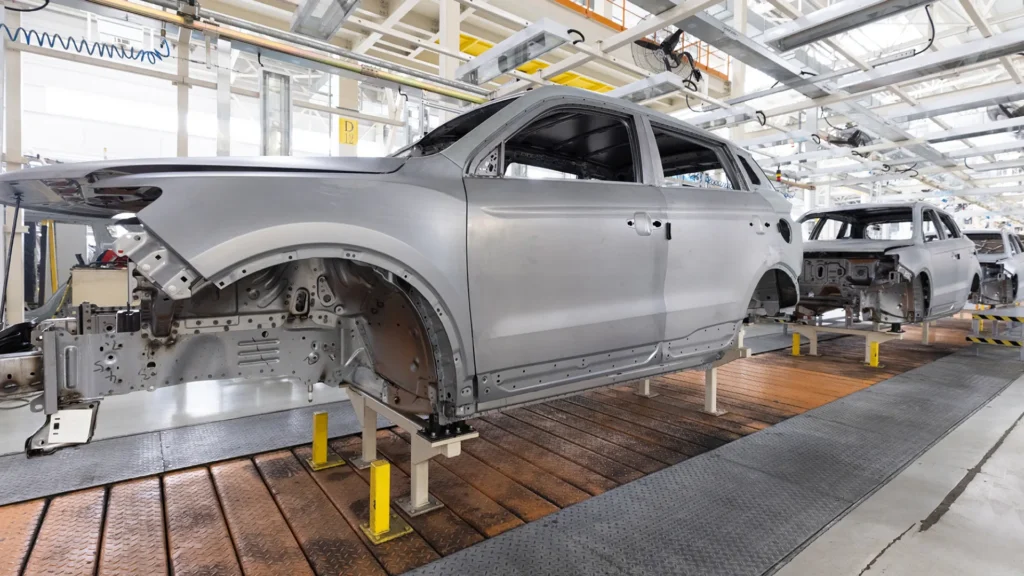
The scale of the acquisition is also notable. The “Body 3” facility reportedly spans around 80,000 square meters, giving Geely substantial production capacity within an established industrial ecosystem. If fully utilized, the plant could help restore output closer to pre-pandemic levels while supporting thousands of existing jobs.
However, the deal remains unconfirmed by both companies. Ford has described the reports as speculative and declined to comment, while Geely has not issued an official statement. This leaves some uncertainty around the final structure and scope of the agreement, including whether it will evolve into a deeper manufacturing or technology partnership.
The broader implications are clear. Chinese automakers are no longer relying solely on exports to penetrate European markets; they are embedding themselves directly within the region’s industrial base. This approach not only mitigates trade risks but also positions them to compete more effectively with established European and American brands.
Looking ahead, if finalized, the Geely-Ford arrangement could become a template for future cross-border collaborations in the auto industry. It would demonstrate how legacy manufacturers and emerging EV leaders can share assets to manage costs and accelerate the transition to electrification. At the same time, it underscores intensifying competition in Europe’s auto market.