
Michelin reported a decline in first-quarter sales due entirely to currency headwinds, but still managed to outperform market expectations—signaling resilience in its underlying business despite a challenging macroeconomic environment.
The company announced that Q1 sales fell 5.4% year-on-year to €6.17 billion, yet still exceeded analyst forecasts of €6.11 billion, according to a company-compiled consensus. This places the focus squarely on foreign exchange pressures rather than operational weakness, as management emphasized that the entire decline was driven by adverse currency effects, particularly the euro’s strength against the U.S. dollar and other currencies.
This performance highlights a recurring theme across global industrial companies: strong underlying demand is increasingly being masked by unfavorable currency movements.
Michelin’s business has historically been exposed to global economic cycles, with revenue tied closely to automotive production, freight activity, and replacement tire demand. Over the past year, the company has already faced headwinds from slowing North American markets and weaker truck tire demand. However, the latest results suggest that operational stability is returning—even if headline figures do not fully reflect it.
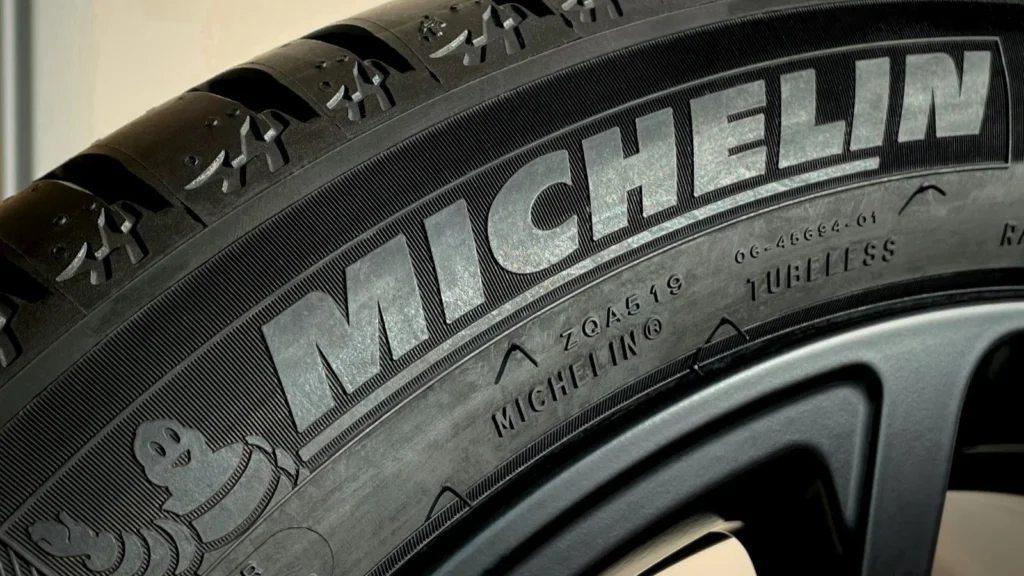
The company stated that revenue remained stable at constant exchange rates, indicating that core demand held up despite external pressures. Tire volumes declined modestly by 1.4%, reflecting softer original equipment demand, but this was partially offset by stronger replacement sales, particularly for premium Michelin-branded products.
This distinction is critical. Replacement tire demand—often considered a more stable and higher-margin segment—grew during the quarter, suggesting that consumer-driven demand remains intact even as industrial and OEM segments lag.
From a financial perspective, the currency impact was significant. Michelin reported that foreign exchange movements alone reduced revenue by 5.4 percentage points, effectively wiping out what would have otherwise been flat year-on-year performance. The euro’s appreciation against key currencies such as the U.S. dollar, Chinese yuan, and Japanese yen created a translation effect that lowered reported sales across all operating segments.
Despite this, the company maintained its full-year 2026 guidance, signaling confidence in its ability to navigate ongoing volatility. Management pointed to a “solid performance” in the quarter and highlighted improvements in product mix, particularly in high-value segments like larger-diameter tires, which continue to gain market share.
The earnings beat, though modest, carries broader implications. In an environment where investors are increasingly sensitive to earnings misses, exceeding expectations—even amid declining sales—helps reinforce confidence in Michelin’s pricing power and cost control. It also suggests that analysts may have underestimated the company’s resilience to external shocks.
However, risks remain. Currency volatility is likely to persist as central banks follow diverging monetary policies, and Michelin’s global footprint makes it especially vulnerable to such fluctuations. Additionally, continued weakness in original equipment demand—particularly in commercial vehicles—could weigh on volumes if economic conditions deteriorate further.
At the same time, structural trends may offer support. The shift toward premium tires, electrification of vehicles, and growth in emerging markets could help offset cyclical pressures. Michelin’s ability to improve its product mix and maintain pricing discipline will be key to sustaining margins in this environment.
Looking ahead, Michelin’s performance suggests a company in transition rather than decline. While headline sales are under pressure, the underlying business appears stable, and in some areas, improving. If currency pressures ease and replacement demand remains strong, the company could see reported growth rebound in the coming quarters.
For now, the message is clear: Michelin’s core operations are holding up better than the numbers suggest—but until foreign exchange conditions stabilize, that strength may continue to be partially hidden in its reported results.