
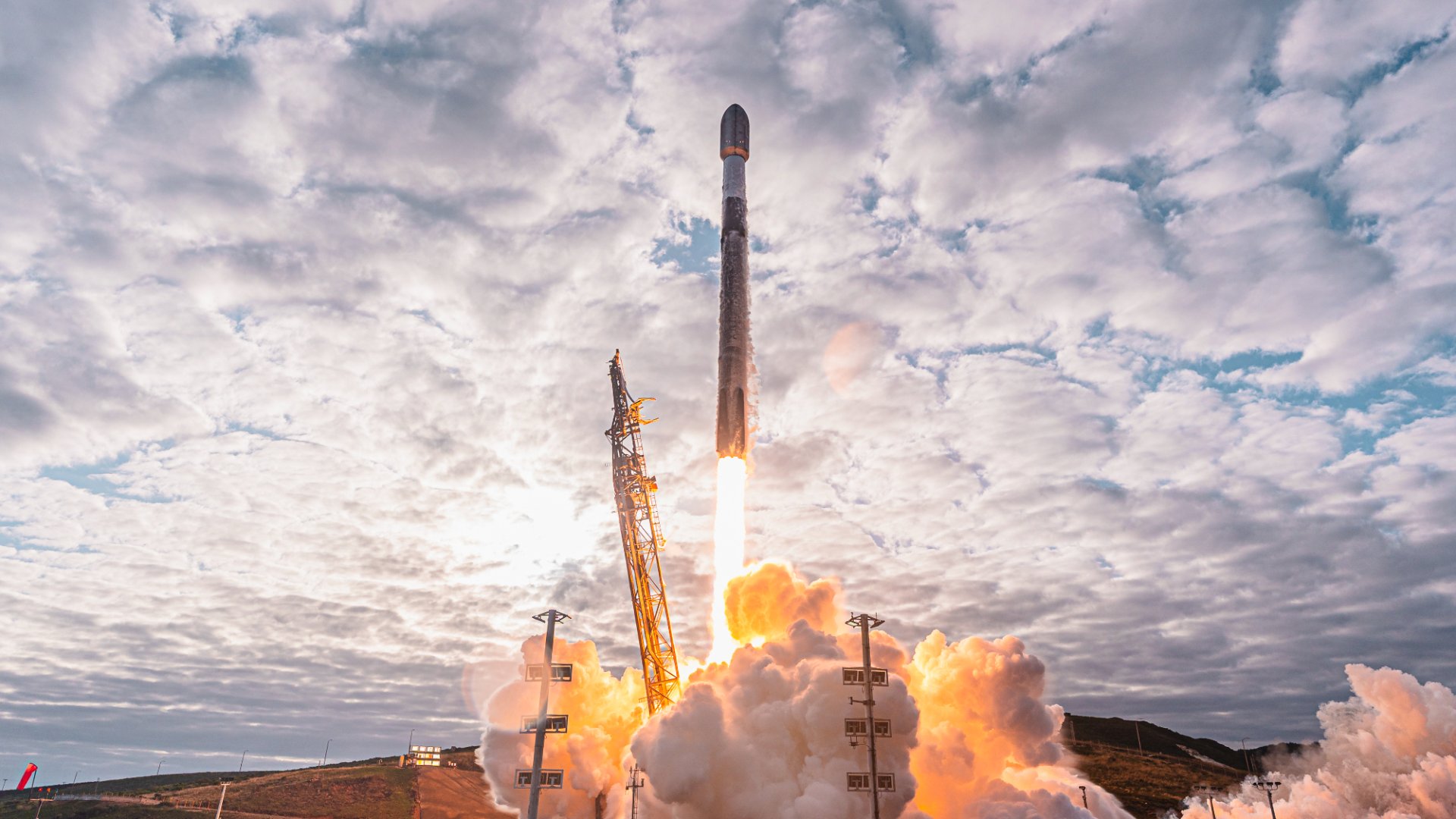
Taiwanese electronics giant Foxconn has successfully launched its second-generation low-Earth orbit (LEO) satellites aboard a SpaceX Falcon 9 rocket, marking a significant escalation in its ambitions to enter the global space technology sector.
The launch, confirmed on May 3, 2026, carried two satellites—PEARL-1A and PEARL-1B—into orbit from California. Both satellites have reached their intended trajectories and are expected to operate for approximately five years, according to company statements.
This development places Foxconn, best known as a key manufacturing partner for companies like Apple, firmly within a rapidly expanding commercial space race increasingly dominated by private-sector players.
Foxconn’s move into satellite technology is not entirely new. The company launched its first-generation satellites in recent years as part of a broader diversification strategy beyond traditional electronics manufacturing. However, the deployment of second-generation systems signals a shift from experimentation toward more advanced, scalable capabilities.
Low-Earth orbit satellites, typically operating at altitudes below 2,000 kilometers, are critical for enabling faster communication speeds and lower latency compared to traditional geostationary systems. This makes them essential for applications ranging from broadband internet to Earth observation and industrial connectivity.
At the core of this mission is technology validation. Foxconn confirmed that PEARL-1A and PEARL-1B are designed primarily to test payload technologies related to communications and space science. This suggests the company is still in a development phase, focusing on building proprietary capabilities before potentially scaling into commercial services.
The choice of SpaceX as the launch partner underscores the growing reliance of global firms on SpaceX’s Falcon 9 platform. The rocket has become the industry’s workhorse due to its reusability and cost efficiency, enabling frequent launches for both government and private missions. In 2025 alone, Falcon 9 completed a record number of missions, reinforcing its dominance in orbital deployment.
Foxconn’s satellite initiative also reflects a broader trend: major technology and manufacturing firms are moving into space infrastructure to secure long-term strategic advantages. Satellite networks are increasingly viewed as critical assets for data transmission, supply chain monitoring, and next-generation connectivity, particularly as global demand for bandwidth continues to surge.

The timing is notable. Space is no longer the domain of national agencies alone. Companies worldwide—from telecommunications firms to automotive manufacturers—are investing heavily in LEO constellations. Regulatory approvals, such as the U.S. authorization for thousands of next-generation Starlink satellites, highlight how quickly orbital infrastructure is scaling.
For Foxconn, the implications go beyond diversification. Building in-house satellite capabilities could strengthen its position in emerging sectors like smart manufacturing, autonomous systems, and global IoT networks. Control over connectivity infrastructure may eventually reduce reliance on third-party providers while opening new revenue streams.
Looking ahead, the success of PEARL-1A and PEARL-1B will likely determine Foxconn’s next steps. If the five-year mission validates its communication payload technologies, the company could move toward deploying a larger constellation or forming strategic partnerships in satellite services.
In practical terms, this launch signals that Foxconn is no longer just assembling the world’s electronics—it is positioning itself to help power the infrastructure that connects them.